
eHACCP.org to Launch IHA-Accredited HACCP Course for Cannabis Growers and Processors

HACCP course for cannabis growers and processors course in December of 2026, IHA accredited, 18-hour, online for Cannabis Licensees (Cultivation Class).
The course was well organized, easy to follow, and used examples that were relevant to our industry. The supporting reference materials were especially helpful and added value to the training.”
LUNENBURG, NOVA SCOTIA, CANADA, September 7, 2026 /EINPresswire.com/ -- eHACCP.org is set to publish its Certified HACCP Principles and GAPs/GMPs for Cannabis Growers and Processors course in December of 2026, an International HACCP Alliance (IHA) accredited, 18-hour, online course developed for Cannabis Licensees (Cultivation Class) requiring a food-safety plan and a food safety system. Meet FDA, CFIA, and GFSI HACCP training requirements. — Maureen Vander Fliet
The HACCP course is accredited by the International HACCP Alliance, online, on-demand, interactive, accredited for 18 hours of HACCP training, and narrated by human voice talent. eHACCP.org does not use AI-generated voices. To facilitate Food Safety Plan development, every learner has access to more than 250 downloadable template documents covering PRPs, GMPs, GAPs, SSOPS, SOPs, tables, charts, HACCP plans, and the other templates that help make those plans work in a greenhouse, indoor room, outdoor field, or mixed-media facility using soil, hydroponics, and other soilless media.
Cannabis cultivation is regulated and audited like other high-care agricultural/food grade produce. Clients also demand the safest products possible. Hazard analysis succeeds when the facility’s foundations are strong: properly designed rooms, tight and waterproof roofs, well maintained HVAC, clean irrigation water, excellent worker hygiene, managed pest control program, tidy storage, and sound logistics. This course treats premises, equipment, storage, transport, and other prerequisite programs as first-class content, then teaches growers how to run a Codex-aligned HACCP plan on top of them.
“A CCP on paper means nothing if the building, equipment, storage rooms, vehicles, water, workers, and growing environment are out of control,” said Stephen Sockett, owner of eHACCP.org. “We built this course around the GAPs/GMPs, and prerequisite programs cannabis operations run on; premises and facilities, equipment maintenance, storage and transport, pest control, water quality, soil and media, hydroponics, aquaponics, sanitation, and hygiene. Then the HACCP principles that tie those controls together.”
The course applies HACCP and GAPs/GMP thinking to cultivation and post-harvest handling, including:
Premises and facilities - site selection and surroundings; building design and construction; walls, floors, ceilings, doors, and windows; drainage and wastewater; lighting; HVAC, filtration, dehumidification, and condensation control; zoning of dirty and clean areas; traffic flow from clone to harvest, dry, cure, trim, and pack; waste and compost staging; storage rooms for nutrients, chemicals, packaging, and finished flower; security and restricted access as they affect contamination control
Equipment maintenance - preventive maintenance of lights, HVAC, dehumidifiers, irrigation and fertigation systems, pumps, reservoirs, benches, conveyors, trimmers, dry racks, and scales; calibration of meters, sensors, and weighing devices; spare-parts control; work-order and breakdown records; hygiene after maintenance (lubricants, tools, contractors); dedicated vs. shared equipment between rooms or lots
Storage and transport - segregated storage of seeds, clones, media, nutrients, pesticides, packaging, in-process material, and finished product; temperature, humidity, and odor control in vaults and cure rooms; FIFO/FEFO and lot identity; pallet and container hygiene; vehicle and trailer inspection; chain of custody between rooms, sites, processors, labs, and distributors; protection from moisture, pests, cross-contamination, and unauthorized access during movement
• Worker hygiene and health - handwashing, protective clothing, illness reporting, jewelry and personal-item rules, visitor control, and hygiene training records
• Water quality and irrigation - source approval, testing, storage, distribution lines, condensate, ice (where used), and water used on plants, tools, and hands
• Pest control and exclusion - insects, rodents, birds, and other pests in grow rooms, greenhouses, drying rooms, packing areas, warehouses, and vehicles; monitoring, chemicals, and service records
• Soil and growing-media management - soil, coco, peat, rockwool, and mixed substrates; receiving, storage, reuse, contamination, and amendment control
• Hydroponics - reservoirs, nutrient solutions, lines, pumps, biofilms, changeout, and equipment sanitation
• Aquaponics - fish health and husbandry interfaces, water chemistry, shared systems, and cross-contamination between aquatic and plant sides
• Sanitation and facility hygiene - rooms, benches, trays, scissors, trimmers, HVAC and dehumidifiers, floors, drains, and clean/dirty zoning
• Fertilizers, nutrients, pesticides, and chemicals - approved lists, labeling, storage, mixing, application, residue awareness, and SDS control
• Equipment and utensil control - dedicated harvest tools and cleaning between lots or rooms
• Air, environment, and building design - airflow, filtration, condensation, lighting, waste, and product flow
• Receiving, storage, and traceability of inputs - clones, seeds, media, nutrients, packaging, and other incoming materials
• Harvest, drying, curing, trimming, and packing hygiene - post-harvest PRPs that sit next to process CCPs
• Allergen, foreign-material, and chemical-hazard basics - relevant to shared facilities and packing
• Document control and recordkeeping - for audits, inspectors, and buyers
The course teaches the 12-steps and seven HACCP principles as they apply to cultivation: product and process description, flow diagrams, hazard analysis, critical control points, critical limits, monitoring, corrective action, verification, and records. Growers leave with a structure they can adapt to indoor, greenhouse, outdoor, hydroponic, aquaponic, or soil-based operations.
Course snapshot
• Title: Certified HACCP Principles and GAPs/GMPs for Cannabis Growers and Processors
• Accreditation: International HACCP Alliance (IHA)
• Length: 18 hours
• Price: $299
• Format: 100% online, on-demand, interactive
• Narration: Human voiced; no AI voices
• Resources: 250+ downloadable templates (SOPs, logs, checklists, hazard-analysis worksheets, maintenance records, storage and transport records, and PRP documents)
• Availability: December 2026 at ehaccp.org
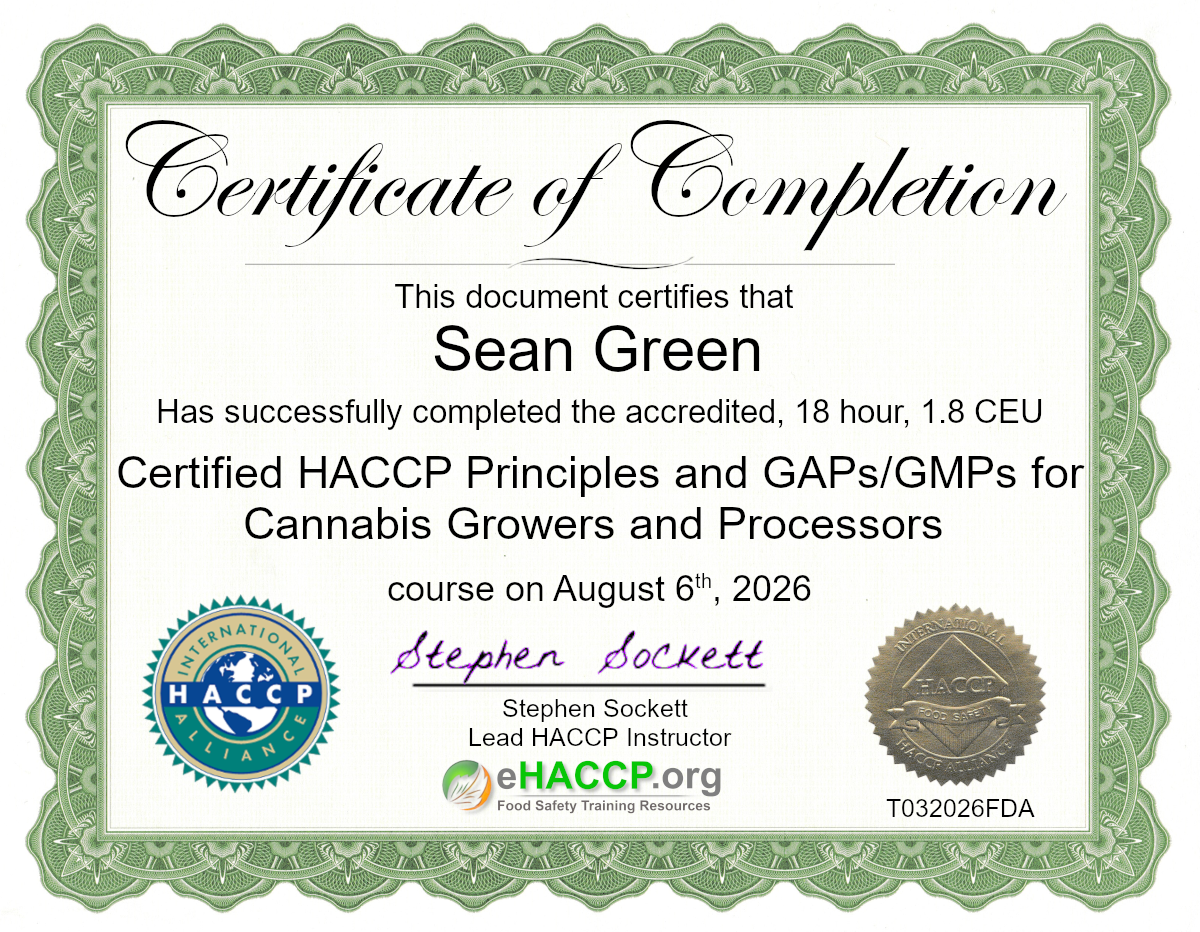
• Certificate of Completion: a hard copy certificate including the IHA’s golden seal.
The course uses the same delivery model eHACCP.org has applied for years in food manufacturing: self-paced modules, interactivity, an examinable path to a certificate of completion, and live support. Teams can train without shutting down a room or sending staff off-site.
Pre-launch details and enrollment notices will be posted at ehaccp.org. Media and corporate training inquiries: (866) 488-1410 or support@ehaccp.org.
About eHACCP.org
Founded in 2007 and based in Lunenburg, Nova Scotia, eHACCP.org delivers IHA-accredited online HACCP and food-safety training. Courses are interactive, human-narrated, and supported by extensive document libraries and human customer support.
Media contact
eHACCP.org
(866) 488-1410
support@ehaccp.org
https://ehaccp.org
Stephen Sockett
eHACCP.org
+1 866-488-1410
email us here
Visit us on social media:
LinkedIn
Facebook
YouTube
X
Other
Legal Disclaimer:
EIN Presswire provides this news content "as is" without warranty of any kind. We do not accept any responsibility or liability for the accuracy, content, images, videos, licenses, completeness, legality, or reliability of the information contained in this article. If you have any complaints or copyright issues related to this article, kindly contact the author above.
